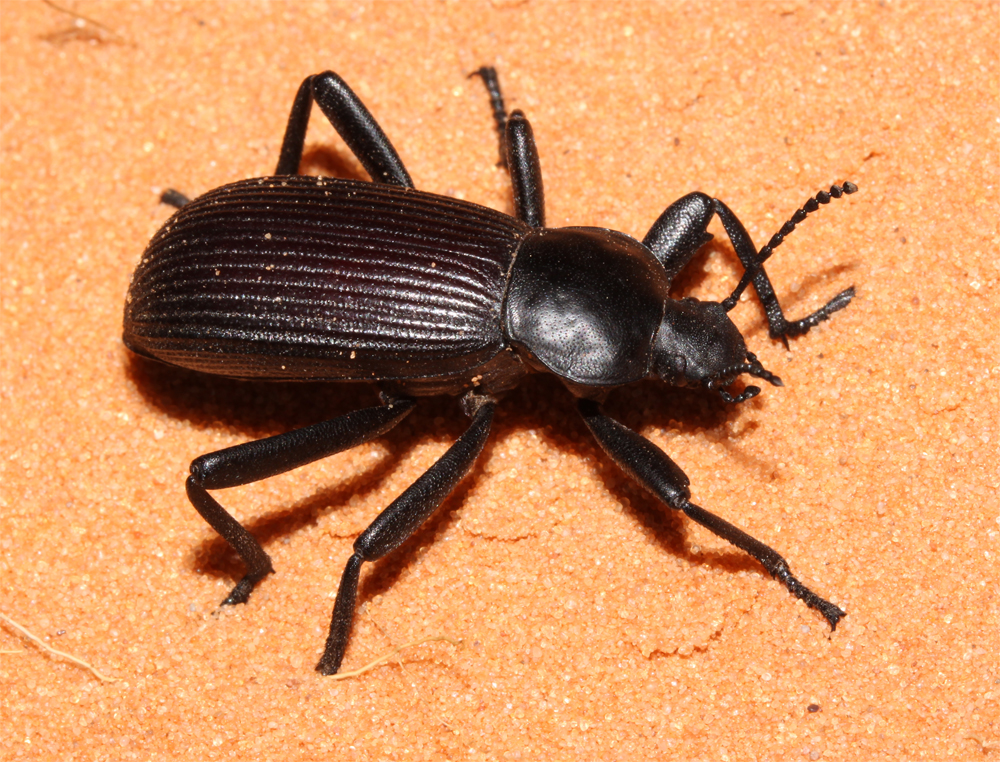
I spent a week in southeast Arizona, in the vicinity of Tucson and points south, east and west from July 22 to July 29. Part of this trip involved participating in the annual Bugguide Gathering, but I arrived several days early to explore and search for insects.
Here are some of the beetles found on these days. The monsoon was in progress but seemed a bit weak. Still, many interesting beetles, other insects, and other organisms were out and about.
 |
| Chrysina beyeri, a very common beetle in Madera Canyon, Santa Rita Mountain Range. It is nocturnal and readily comes to lights. |
 |
| This "pile" of mating Chrysina beyeri were sitting on a sheet under a black light. They were locked in this arrangement for at least a half hour, and make an interesting "art" photograph! Madera Canyon. |
 |
| Chrysina gloriosa, the Glorious Beetle. What appear as blackish stripes are shiny silver. A truly gloriously beautiful beetle! Madera Canyon. |
 |
| Strategus aloeus, an Ox Beetle. This is a large male. This species is common in Madera Canyon, also, and occurs from the mesquite scrubland all the way up through the oak woodland, in my experience. |
 |
| Strategus aloeus, female. She lacks the elaborate horns of the male above. Madera Canyon. |
 |
| Strategus cessus. Males and females look very similar and lack horns. Madera Canyon. |
 |
| Dichotomius colonicus, a type of dung beetle. This is one of the larger dung beetle species in North America north of Mexico. There are many species in this genus in Mexico and points south, but only two found in the United States. Madera Canyon. |
 |
| Canthon indigaceus, a small ball-rolling dung beetle. This one was found on the Gleeson Road, rolling balls alongside Canthon imitator, a larger species with a black coloration (see below). |
 |
| Canthon imitator, in the process of forming a dung ball with cow dung. A Canthon indigaceus can be seen at the upper left. |
 |
| Canthon imitator, atop its ball. A tiny dipteran sits on the ground to the right. Some of these little flies were clinging to the beetles while the beetles rolled their balls. Gleeson Road. |
 |
| Canthon imitator, with dung ball. The two beetles on the right were engaged in a furious battle, presumably to determine ownership of the ball. The beetle on the left stayed stationary and did not enter the fray. Gleeson Road. |
 |
| What appears to be Polyphylla hammondi, a fairly common species in the western United States. Madera Canyon. |
 |
| Polyphylla hammondi. At the truck stop at the Intersection of Ruby Road and I-19. This location is adjacent to the Santa Cruz River and its lights attract many interesting insects at night during monsoon season. |
 |
| Pelidnota lugubris. A common species, this one found at the well-lit rest area on the northbound side of I-19, south of Green Valley. |
 |
| Cotalpa consobrina. Another common species in this area, sometimes accumulating in the thousands at the Border Patrol checkpoint lights along I-19. This one was at the Ruby Road truck stop. |